
Labour demand should not be planned on hope. Deploy Mint helps predict workforce pressure earlier.
Demand chaos starts when clients know how many workers they want, but nobody has a clear view of whether confirmed supply, predicted attendance and workforce risk are strong enough to protect the operation.
Deploy Mint helps Recruit Mint and employers move from reactive labour planning to clearer demand intelligence, predicted shortfalls, risk visibility and recommended recovery action.
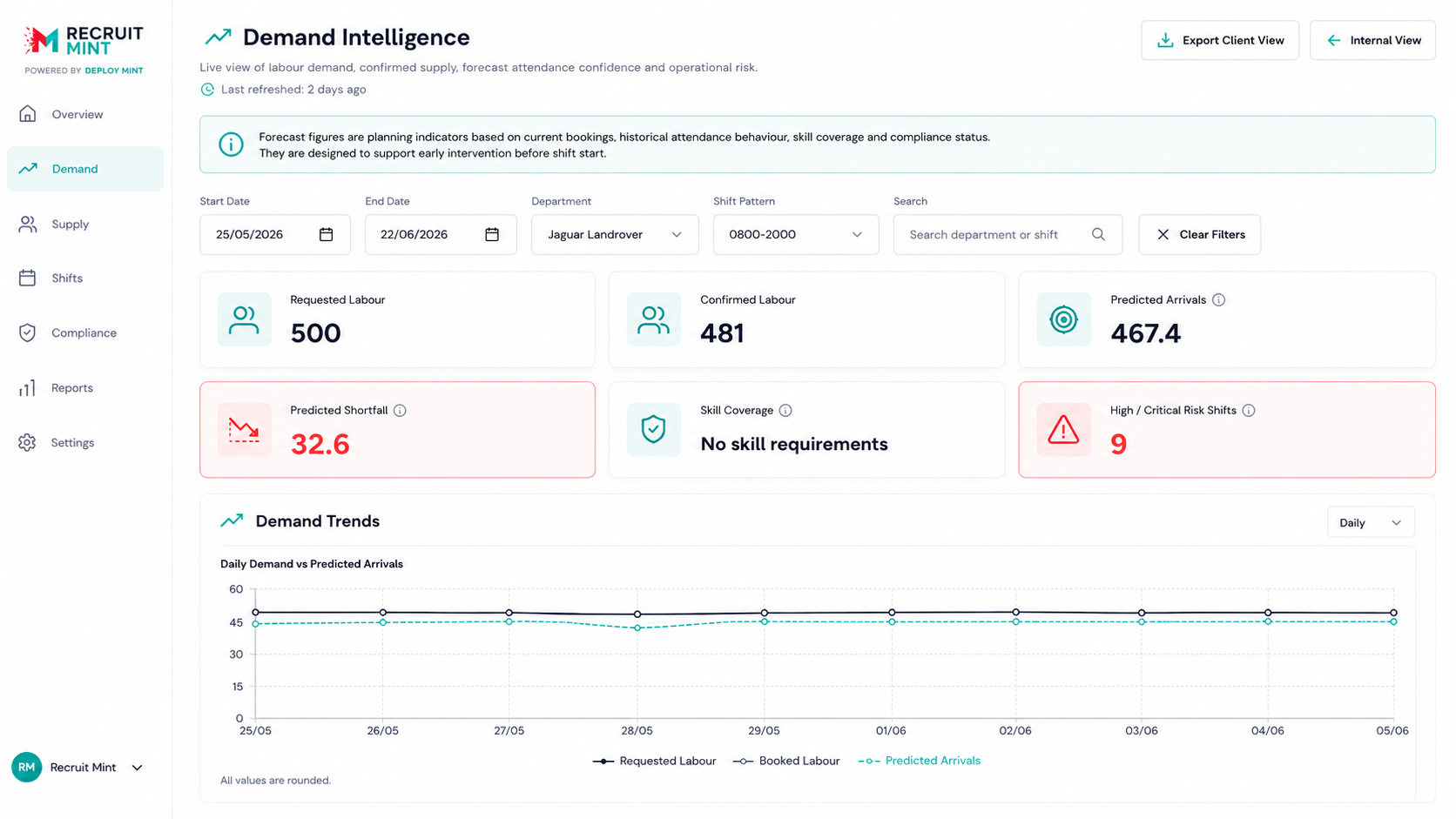
Forecast workforce pressure before the shift starts. Demand. Supply. Predicted arrivals. Risk.
Demand Intelligence gives employers and Recruit Mint a clearer planning view of requested labour, confirmed supply, predicted arrivals, shortfall exposure and high-risk shifts before the operation is under pressure.
Demand planning fails when the labour plan does not reflect reality. Booked labour is not the same as predicted attendance.
A rota can look covered, but if attendance history, no-show patterns, skill coverage and compliance risks are not considered, the real workforce position may be weaker than it appears.
Requested labour changes
Client demand can move quickly across departments, shifts, weeks and peak periods.
Confirmed supply is not enough
Confirmed labour may still not translate into the number of workers who actually arrive.
Predicted arrivals expose risk
Historical attendance behaviour can reveal likely gaps before the shift begins.
Risk shifts hide in the plan
High-risk shifts can be missed when planning is done manually or too late.
When demand is not forecast properly, shortfalls become predictable surprises.
Workforce planning problems create repeated pressure. Clients may overbook, underbook, miss shortfall risk, rely on overtime or call the agency too late to recover the position properly.
The issue is not just headcount. It is whether the plan is realistic once attendance risk, skill coverage and compliance status are taken into account.
Shifts are likely to run short because predicted arrivals are lower than requested demand.
Managers discover the gap too late and have fewer options to recover the shift.
Poor planning can create unnecessary overbooking, overtime or ineffective cover.
Recruiters are forced into urgent calls instead of planning the workforce earlier.
Deploy Mint turns labour demand into workforce intelligence. Plan earlier. Forecast better. Act sooner.
Demand Intelligence helps employers and Recruit Mint understand where labour demand, confirmed supply and predicted attendance may create exposure, allowing teams to intervene before the shift starts.
Requested Labour View
See the total labour requirement across selected dates, departments and shift patterns.
Confirmed Labour Tracking
Compare what the client needs against the workers currently confirmed for the plan.
Predicted Arrivals
Use attendance behaviour and workforce signals to estimate likely arrival levels.
Predicted Shortfall
Highlight where the plan may be exposed before the operation feels the pressure.
Risk Shift Visibility
Identify high or critical risk shifts where early intervention may be needed.
Recommended Action
Support decisions such as recruiting additional workers, building standby pools or confirming workers earlier.
Demand planning improves when risk is visible before the shift. Forecast the pressure before it becomes panic.
Deploy Mint helps turn labour requests into a clearer planning and intervention process.
The labour plan looks covered
The requested and confirmed numbers appear close, but predicted attendance risk is hidden.
The shift still runs short
Arrival patterns, no-shows, skill gaps or compliance risk reduce the true workforce position.
Risk is forecast earlier
Demand Intelligence helps teams see shortfall exposure and act before the shift starts.
Better forecasting creates stronger workforce control. Less firefighting. More planning.
The value is early intervention. When demand risk is visible before the shift starts, Recruit Mint and clients can plan cover, reduce exposure and make smarter labour decisions.
Spot predicted shortfalls before the shift reaches breaking point.
Use demand, supply and predicted attendance to make better decisions.
Highlight high-risk shifts before they damage service levels.
Show clients where risk exists and what action is recommended.
Let’s forecast workforce pressure before it hits the operation.
Book a workforce review and we’ll help identify where demand planning, predicted arrivals, shortfall visibility, risk scoring or recommended recovery action could improve workforce control.